
Why Eye Diseases Often Show No Symptoms in Early Stages
One of the most dangerous truths about vision loss is that it often arrives without warning. Many of the conditions that lead to permanent blindness develop quietly, causing no pain, no blurring, and no obvious change you would notice in the mirror. By the time symptoms finally appear, irreversible damage may already be done. These so-called silent eye diseases are precisely why doctors stress prevention over reaction. Understanding why early eye disease symptoms are so easy to miss, and what you can do about it, is one of the most important steps you can take to protect your sight.
Why the Eye Hides Its Problems So Well
The eye is remarkably good at compensating for damage, and that is exactly the problem. Vision is a partnership between the two eyes and the brain. When one eye begins to weaken, the stronger eye quietly fills in the gaps, masking the loss. You may go months or even years without realising that one eye has declined significantly. This natural compensation is a major reason silent eye diseases stay hidden for so long.
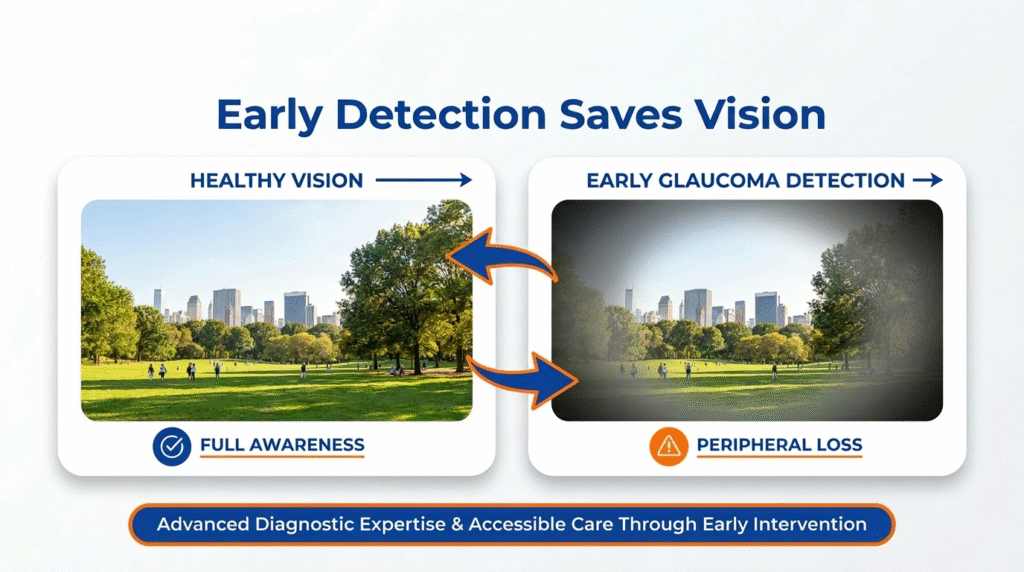
There is also the matter of how certain diseases progress. Conditions like glaucoma damage the peripheral, or side, vision first. Central vision, the part you use for reading and recognising faces, stays sharp until the disease is advanced. Because central vision feels normal, most people assume their eyes are fine. The damage creeps inward slowly, and the brain smooths over the missing edges so seamlessly that the loss goes unnoticed until it reaches the centre, when treatment options become far more limited.
The Most Common Silent Threats to Your Vision
Several major eye diseases are notorious for lacking early warning signs. Glaucoma, often called the “silent thief of sight,” gradually damages the optic nerve, usually with no pain and no early symptoms at all. Diabetic retinopathy, a complication of diabetes, can quietly damage the retina’s blood vessels long before vision changes appear. Age-related macular degeneration and certain retinal conditions can also progress with subtle or absent symptoms in their earliest, most treatable stages.
What these conditions share is a cruel timeline: the window when treatment is most effective is exactly the window when you feel perfectly healthy. This disconnect between how your eyes feel and what is actually happening inside them is the heart of the danger. Building genuine eye health awareness means accepting that “my vision seems fine” is not the same as “my eyes are healthy.”
Why Regular Eye Testing Is Your Best Defence
If the diseases give no warning, how do you catch them? The answer is regular eye testing. A comprehensive eye examination can detect signs of disease years before you would ever notice a symptom. During a thorough check, a specialist can measure your eye pressure, examine the optic nerve, scan the retina, and spot early changes invisible to you. Many of these conditions, when found early, can be slowed or controlled, helping prevent blindness that would otherwise be unavoidable.
This is why eye specialists recommend routine examinations even for people who feel they see perfectly well. Adults should generally have their eyes checked periodically, with more frequent testing for those over forty, people with diabetes or high blood pressure, and anyone with a family history of eye disease. These groups carry a higher risk and benefit most from early detection. You can learn more about comprehensive eye screening and specialist care at Dr. Solanki Eye Hospital, where modern diagnostic technology helps catch problems early.
Who Is Most at Risk and What to Watch For
While silent eye diseases can affect anyone, certain factors raise the odds. A family history of glaucoma or macular degeneration, diabetes, high blood pressure, previous eye injuries, prolonged steroid use, and advancing age all increase risk. People in these categories should be especially proactive about scheduling examinations rather than waiting for symptoms.
Although early eye disease symptoms are often absent, there are occasional clues worth respecting. Subtle changes such as difficulty adjusting to darkness, mild blurring that comes and goes, frequent changes in your glasses prescription, eye strain, or seeing faint halos around lights can sometimes signal an underlying issue. None of these should be dismissed as simple tiredness. If you notice anything unusual, treat it as a prompt to book an examination, not a reason to wait and see. Acting on small signs early can make the difference between preserving and losing your vision.
Turning Awareness Into Action
The good news is that knowledge changes outcomes. Most blindness caused by these conditions is preventable or manageable when caught early. The single most powerful habit you can build is making eye examinations a regular, non-negotiable part of your health routine, just like checking your blood pressure or visiting the dentist. Pair that with healthy daily habits: managing chronic conditions like diabetes, protecting your eyes from excessive UV exposure, eating a nutrient-rich diet, and not ignoring changes when they appear.
Spreading eye health awareness within your family matters too. Because many of these diseases are hereditary, encouraging parents, siblings, and children to get tested can protect more than just their own sight. A culture of prevention, where regular eye testing is simply expected, is the strongest protection a community can have against avoidable blindness. To take that first step for yourself, you can explore the full range of diagnostic and treatment services at Dr. Solanki Eye Hospital.
The Takeaway
Silent eye diseases are dangerous precisely because they ask nothing of you until it is too late. They do not hurt, they do not blur, and they do not announce themselves, which is why so many people discover them only after permanent damage has occurred. The remedy is simple but powerful: do not wait for symptoms that may never come in time. Regular, comprehensive eye examinations are the only reliable way to catch these conditions while they are still treatable.
Protect your vision before problems begin. Schedule a comprehensive eye examination at Dr. Solanki Eye Hospital today, because the best time to detect a silent eye disease is long before you feel a thing.