
Screen Time and Eye Strain: A Growing Problem Among Bangalore Professionals
Bangalore’s thriving professional landscape has created an unprecedented health challenge that affects thousands of workers daily. As the city continues to cement its position as India’s technology and business hub, professionals across industries are spending more time than ever before on digital screens. The effects of screen time on eyes have become a critical health concern that extends far beyond temporary discomfort. From software engineers to financial analysts, marketing professionals to customer service representatives, eye strain among Bangalore professionals is reaching epidemic proportions. Understanding the connection between prolonged screen exposure and vision problems is the first step toward protecting your eye health in today’s digital-first work environment.
The Digital Reality: Understanding Screen Time Effects on Eyes
The modern professional workspace has evolved dramatically over the past decade, with screen time becoming the dominant feature of most jobs. Bangalore professionals typically spend 8-12 hours daily staring at computer monitors, smartphones, and tablets—often simultaneously. This constant digital engagement creates significant strain on the visual system. The effects of screen time on the eyes manifest through multiple mechanisms that compound throughout the workday.
When viewing digital screens, your eyes must constantly refocus and realign to process pixelated text and images. This continuous adjustment forces the ciliary muscles inside your eyes to work overtime, leading to muscle fatigue and strain. Additionally, the concentrated focus required for screen work dramatically reduces your natural blink rate from approximately 15-20 blinks per minute to just 5-7 blinks per minute. This reduced blinking means your eyes’ protective tear film evaporates faster than it can be replenished, resulting in dry, irritated eyes.
The positioning of screens also contributes to the problem. Most professionals work with monitors positioned at distances and angles that aren’t optimal for eye comfort. This poor ergonomic setup intensifies the effects of screen time on the eyes by forcing awkward viewing angles and constant accommodation adjustments. The blue light emitted by digital devices adds another layer of concern, potentially disrupting sleep patterns and contributing to retinal stress over extended periods.
Digital eye strain doesn’t develop overnight—it accumulates gradually as your visual system struggles to meet the demands of constant screen exposure. Many Bangalore professionals initially dismiss symptoms as simple tiredness, not realising they’re experiencing the early stages of computer vision syndrome that requires professional attention and lifestyle modifications.
Computer Vision Syndrome: When Eye Strain Becomes Chronic
Computer vision syndrome is a collection of eye and vision-related problems that result from prolonged use of digital devices. This condition has become increasingly prevalent among eye strain Bangalore professionals, affecting an estimated 60-70% of workers who spend significant time on computers. Unlike temporary eye fatigue, which resolves with rest, computer vision syndrome can lead to persistent symptoms that affect both professional performance and quality of life.
The hallmark symptoms of computer vision syndrome include persistent headaches, blurred vision, difficulty focusing, dry and irritated eyes, light sensitivity, and neck or shoulder pain. These symptoms often worsen as the workday progresses and may temporarily improve with rest, only to return when screen work resumes. The cyclical nature of these symptoms can create a pattern of chronic discomfort that many professionals accept as an unavoidable aspect of modern work.
The effects of screen time on the eyes extend beyond immediate discomfort. Prolonged exposure to the conditions that cause computer vision syndrome can accelerate the progression of myopia (nearsightedness) in young professionals. Studies have documented significant prescription changes within just 2-3 years of intensive screening—progression rates that would typically take much longer. Some individuals develop accommodative spasm, where the focusing muscles become locked in a near-focus position, making distant vision difficult even when looking away from screens.
IT workers’ eye health is particularly vulnerable due to the intensity and duration of screen exposure inherent to technology roles. Software developers, data analysts, and digital professionals often use multiple monitors simultaneously while working on complex tasks that require sustained concentration. This combination of factors creates ideal conditions for developing severe digital eye strain and computer vision syndrome.
For comprehensive evaluation and treatment of screen-related eye problems, professionals can explore specialised vision care options at Dr. Solanki Eye Hospital’s LASIK and refractive services, where experts understand the unique visual demands facing today’s digital workforce.
The Bangalore Context: Why Local Professionals Face Greater Risk
Eye strain Bangalore professionals experience occurs within a specific context that amplifies the problem beyond what workers in other cities might face. Bangalore’s corporate culture often normalises extended working hours, with many professionals regularly logging 10-12 hours days at their desks. The pressure to meet deadlines, participate in global conference calls across multiple time zones, and continuously upskill through online courses creates a work environment where screen breaks are viewed as luxuries rather than necessities.
The city’s traffic congestion adds another dimension to the problem. Many Bangalore professionals spend 2-3 hours daily commuting, during which they continue to be exposed to screens by checking emails, browsing social media, or consuming digital content on smartphones and tablets. This means that screen time effects on eyes accumulate not just during work hours, but throughout the entire waking day, leaving little time for visual rest and recovery.
Climate factors also contribute to IT workers’ eye health challenges. Bangalore’s rising temperatures have led to greater reliance on office air conditioning, which reduces ambient humidity and accelerates tear film evaporation. The combination of reduced blinking from screen focus and dry indoor air creates perfect conditions for chronic dry eye syndrome—one of the most common complications of prolonged digital device use.
The competitive nature of Bangalore’s job market discourages professionals from prioritising health concerns over productivity. Many workers delay seeking treatment for eye strain, fearing that taking time for medical appointments or implementing protective measures might be perceived as a sign of reduced commitment. This cultural context means that digital eye strain often progresses to more serious stages before professionals seek help.
Protecting Your Vision: Practical Strategies for Screen-Heavy Workdays
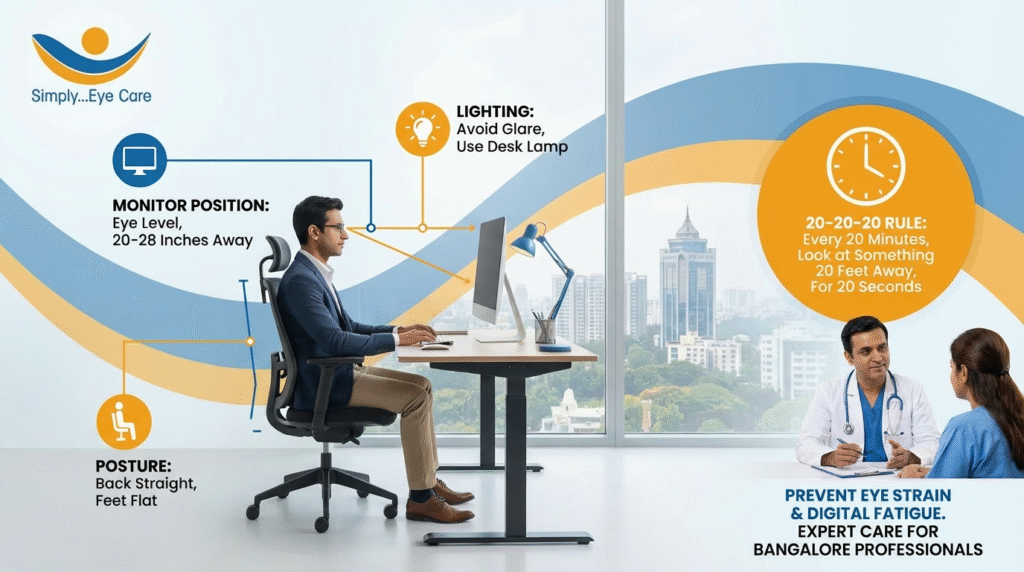
Fortunately, the effects of screen time on the eyes can be significantly reduced through conscious effort and strategic workplace modifications. The 20-20-20 rule provides a simple yet effective foundation: every 20 minutes, look at something 20 feet away for at least 20 seconds. This practice allows your ciliary muscles to relax and promotes natural blinking, addressing two primary causes of digital eye strain.
Optimising your workspace ergonomics represents another crucial intervention for IT workers’ eye health. Position your primary monitor at arm’s length distance, with the top of the screen at or slightly below eye level. This positioning reduces the need for excessive eye movement and minimises neck strain. Adjust screen brightness to match your environment’s ambient lighting, and position monitors to minimise glare from windows or overhead lights. Consider using anti-glare screen filters if environmental lighting cannot be adequately controlled.
Artificial tears can provide significant relief from dry eye symptoms associated with computer vision syndrome. Preservative-free formulations are preferable for frequent use throughout the day. Some professionals benefit from prescription medications that increase natural tear production or reduce ocular surface inflammation. Blue-light-filtering glasses may offer subjective comfort, though research on their necessity continues to evolve.
Beyond these immediate interventions, regular comprehensive eye examinations are essential for monitoring and maintaining eye health in the digital age. Annual exams allow ophthalmologists to detect early changes in vision and prescribe corrective lenses specifically optimised for computer work distances. Some professionals benefit from computer-specific glasses with prescription modifications that reduce the need to focus at typical screen distances, directly addressing the effects of screen time on the eyes.
For personalised strategies tailored to your specific visual demands and symptoms, consult with specialists at Dr. Solanki Eye Hospital who can provide comprehensive assessments and treatment plans designed for Bangalore’s professional workforce.
Take Action to Protect Your Vision Today
The effects of screen time on eyes represent a serious and growing health concern for Bangalore professionals, but they don’t have to be an inevitable consequence of modern work. Understanding how digital eye strain and computer vision syndrome develop empowers you to take proactive measures that protect your vision for decades to come. Whether you’re experiencing early symptoms of eye strain or want to prevent future problems, professional guidance can make a significant difference in your visual health and overall quality of life.
Don’t wait until eye discomfort becomes debilitating or vision changes become permanent. IT workers’ eye health deserves the same attention and care you give to your professional development. Implement the protective strategies outlined above, optimise your workspace, and schedule a comprehensive eye examination to establish a baseline for your vision health. Your eyes are irreplaceable assets that enable your professional success—invest in their care today to ensure they serve you well throughout your career and beyond.