
Long Commutes in Bangalore: How Travel Fatigue Impacts Your Eyes
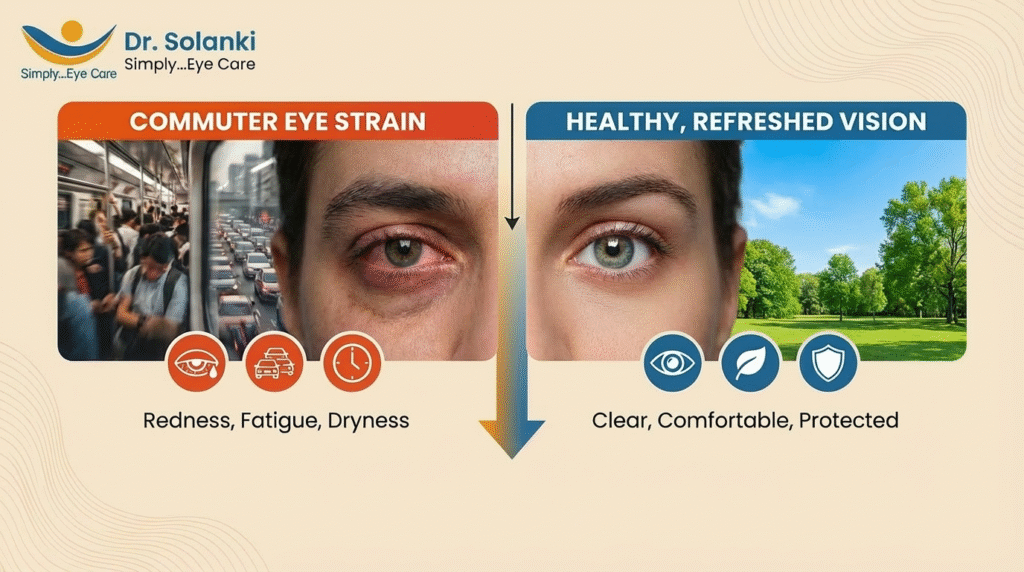
Bangalore’s infamous traffic congestion has become more than just a daily inconvenience—it’s a significant health hazard that’s silently damaging the vision of millions of commuters. As the city’s infrastructure struggles to keep pace with its rapid growth, professionals spend an average of 2-3 hours daily navigating congested roads, often under stressful conditions that take a serious toll on eye health. Long commute eye strain has emerged as an underrecognized yet widespread problem affecting Bangalore’s workforce. The combination of prolonged focus on nearby objects, exposure to vehicle emissions, constant visual adjustments to changing traffic conditions, and continuous screen time during transit creates a perfect storm for vision problems from travel fatigue. Understanding how your daily commute affects your eyes is essential for protecting your vision in one of India’s most traffic-challenged cities.
The Hidden Visual Demands of Bangalore’s Daily Commute
Travel fatigue among Bangalore commuters involves more than physical exhaustion—it places extraordinary demands on the visual system that accumulate over time. Whether you’re driving yourself or riding as a passenger, your eyes work constantly to process rapidly changing visual information. Drivers must maintain sustained focus on the road ahead while simultaneously monitoring side mirrors, rearview mirrors, dashboard displays, and surrounding vehicles. This constant shifting of visual attention between near and far distances forces the eyes’ focusing muscles to continuously adjust, leading to significant strain.
The stop-and-go nature of Bangalore traffic intensifies eye strain during long commutes. During heavy congestion, drivers focus primarily on vehicles just meters ahead for extended periods. This sustained near-focus work is similar to staring at a computer screen, which causes the ciliary muscles inside the eyes to remain contracted for unnaturally long periods. When traffic finally moves, sudden shifts to distant focus and rapid visual processing create additional stress on an already fatigued visual system.
Passengers aren’t immune to these effects. Many Bangalore commuters use their travel time to catch up on work emails, browse social media, or consume digital content on smartphones and tablets. This screen exposure during the commute adds to the screen time accumulated during office hours, further compounding eye health concerns. The combination of vehicle motion, poor lighting conditions inside vehicles, and the close viewing distances required for mobile devices creates ideal conditions for the development of Bangalore commuter eye problems.
Environmental factors during the commute further compromise vision health. Exposure to vehicle exhaust, dust, and pollutants irritates the ocular surface, while vehicle air conditioning reduces humidity and accelerates tear film evaporation. These conditions contribute to dry eye syndrome, one of the most common vision problems associated with travel fatigue among regular commuters.
Understanding the Specific Eye Problems Linked to Long Commutes
Bangalore commuters experience eye problems that manifest in various symptoms, which many professionals mistakenly attribute to general tiredness rather than specific vision issues. The most common complaint is eye fatigue, characterised by a heavy, tired sensation in and around the eyes that intensifies after particularly long or stressful commutes. This fatigue often accompanies difficulty focusing, where your eyes struggle to shift between near and distant objects even after reaching your destination.
Headaches are another hallmark symptom of long-commute eye strain. These headaches typically localise around the temples, forehead, or behind the eyes and result from sustained muscle tension during constant visual focus adjustments. Unlike typical tension headaches, commute-related headaches often improve with rest but return predictably after subsequent commutes, establishing a clear pattern that indicates an underlying vision problem.
Dry eye symptoms become particularly pronounced during and after commutes. The reduced blink rate associated with concentrated visual tasks, combined with exposure to air conditioning and environmental pollutants, can lead to chronic irritation. Many commuters experience burning sensations, grittiness, redness, and paradoxically, excessive tearing as the eyes attempt to compensate for inadequate tear film coverage. These vision problems from travel fatigue can persist for hours after the commute, affecting work performance and quality of life.
Light sensitivity often develops in individuals experiencing chronic eye health issues during commutes. Prolonged exposure to harsh sunlight, vehicle headlights, and reflective surfaces during daily commutes can make the eyes hypersensitive to bright lights. This photophobia makes subsequent screen work more uncomfortable and can trigger or intensify headaches, creating a cycle of discomfort that extends throughout the entire day.
For comprehensive evaluation and treatment of commute-related eye problems, Dr. Solanki Eye Hospital offers specialised care addressing the unique vision challenges faced by Bangalore’s commuting professionals.
The Cumulative Impact: How Daily Commutes Accelerate Vision Deterioration
The effects of travel fatigue Bangalore professionals experience don’t remain confined to commute time—they accumulate and interact with other visual stressors, accelerating overall vision deterioration. When you combine the 2-3 hours of long commute eye strain with 8-10 hours of office screen time, your eyes receive virtually no opportunity for meaningful rest and recovery. This continuous visual demand creates chronic stress on the focusing system that can lead to permanent changes in vision over time.
Research suggests that sustained near-work, whether on screens or in commute-related visual tasks, can accelerate myopia progression in adults. While nearsightedness traditionally stabilises in early adulthood, the intense visual demands of modern professional life—including long commutes—appear to drive continued prescription changes well into middle age. Many Bangalore professionals report needing stronger glasses every 1-2 years, a progression rate significantly faster than that expected with normal ageing.
The psychological stress associated with Bangalore’s challenging traffic conditions adds another dimension to the vision problems caused by travel fatigue. Stress triggers physiological responses that affect tear production, increase muscle tension around the eyes, and alter blood flow to ocular structures. Chronic stress from daily commute anxiety can exacerbate existing Bangalore commuter eye problems and make the eyes more vulnerable to strain and fatigue.
Sleep disruption represents another often-overlooked consequence of long commutes that impacts eye health during the commute and beyond. Professionals who spend 3+ hours daily commuting have less time for adequate sleep, and the stress of navigating traffic can impair sleep quality. Poor sleep prevents proper eye recovery, as many important ocular maintenance processes occur during rest. This creates a vicious cycle in which inadequate recovery increases vulnerability to strain, further impairing sleep quality.
Protecting Your Eyes During Your Daily Commute
While you may not be able to eliminate your commute entirely, you can implement strategies to minimise long commute eye strain and protect your vision health. For drivers, the 20-20-20 rule applies just as it does for screen work: whenever traffic allows, take brief moments to look at distant objects—billboards, buildings, or landmarks at least 20 feet away. This practice gives your focusing muscles periodic breaks from sustained near-focus work.
Proper sunglasses represent essential protection against the harsh glare and UV exposure encountered during daytime commutes. Invest in quality polarised sunglasses that block 100% of UVA and UVB rays. Polarisation reduces glare from reflective surfaces, such as other vehicles, road surfaces, and buildings, reducing squinting and eye strain associated with bright light. For those who wear prescription glasses, prescription sunglasses, or clip-on polarised lenses, ensure you don’t have to choose between clear vision and eye protection.
If you’re a passenger during your commute, resist the temptation to fill every minute with screen time. Instead, use portions of your commute for visual rest. Looking out the window at varying distances, closing your eyes for brief periods, or practising conscious blinking exercises can provide meaningful relief from the travel fatigue Bangalore commuters experience. When you must use devices during commute, hold them at a comfortable distance (at least 16 inches away), increase font sizes to reduce squinting, and adjust screen brightness to match ambient lighting conditions.
Maintaining proper hydration throughout the day supports tear production and helps counteract the dry eye symptoms associated with Bangalore commuter eye problems. Keep artificial tears or lubricating eye drops readily available for use during particularly long or uncomfortable commutes. Preservative-free formulations are best for frequent use and won’t cause additional irritation.
Consider adjusting your commute schedule when possible to avoid peak traffic hours. Even a 30-minute shift in departure time can significantly reduce commute duration and the associated visual stress. Some employers offer flexible working hours specifically to help employees avoid the worst traffic periods—a benefit that directly impacts eye health during commute as well as overall wellbeing.
For personalised strategies addressing your specific commute-related vision concerns and comprehensive eye health assessments, consult the experienced specialists at Dr. Solanki Eye Hospital who understand the unique challenges facing Bangalore’s professional community.
Take Control of Your Commute Eye Health Today
Long commute eye strain doesn’t have to be an inevitable consequence of living and working in Bangalore. While the city’s traffic challenges show no signs of immediate resolution, you can take proactive steps to protect your vision from the cumulative effects of travel fatigue that Bangalore professionals experience daily. Recognising that your commute actively contributes to vision problems from travel fatigue is the first step toward implementing protective strategies that preserve your eye health for decades to come.
Don’t dismiss persistent eye discomfort, headaches, or vision changes as normal parts of professional life. These symptoms signal that your visual system is under excessive stress and needs intervention. Whether you’re experiencing early signs of Bangalore commuter eye problems or chronic discomfort, a professional evaluation can identify underlying issues and provide targeted solutions. Schedule a comprehensive eye examination to assess how your daily commute and work demands are affecting your vision, and develop a personalised protection plan that addresses your specific needs. Your eyes carry you through every commute and workday—give them the care and attention they deserve.