
Digital Eye Strain in Adults and Kids: Causes, Symptoms & Prevention Tips
We live in a screen-saturated world. From morning emails to late-night streaming, our eyes are working overtime to keep up with phones, laptops, tablets, and televisions. The result is a fast-growing condition known as digital eye strain, and it’s affecting both adults and children at record levels. Whether you’re a working professional spending eight hours at a computer or a parent worried about your child’s online classes, understanding this condition is the first step to protecting long-term eye health.
In this guide, we’ll break down what digital eye strain really is, why it happens, the warning signs to watch for, and the most effective ways to prevent and treat it.
What Is Digital Eye Strain and Computer Vision Syndrome?
Digital eye strain, also called computer vision syndrome, is a group of eye and vision-related problems that develop from extended use of digital screens. When you stare at a screen, your eyes work harder than they do with printed text because of glare, flicker, contrast issues, and unusual viewing distances. Add in the fact that most people blink about 50% less while using screens, and you have a recipe for tired, dry, irritated eyes.
While digital eye strain doesn’t usually cause permanent damage, it can seriously impact daily comfort, productivity, and concentration. In children, prolonged screen time has also been linked to a rise in early-onset myopia. The condition is reversible with the right habits and care, but ignoring early symptoms can lead to chronic discomfort.
Common Causes of Digital Eye Strain
Several factors contribute to the rise in digital eye strain among adults and kids. The most common culprits include:
- Long, uninterrupted screen time without breaks for the eyes to rest
- Poor lighting, whether too bright, too dim, or with strong glare on the screen
- Incorrect screen distance and angle, such as holding phones too close or tilting laptops awkwardly
- Uncorrected vision problems, including outdated prescriptions or undiagnosed refractive errors
- Exposure to blue light emitted by LED screens can affect visual comfort and disrupt sleep cycles
- Reduced blinking, leading to dry eyes and surface irritation
For children, the issue is often amplified by smaller faces, smaller devices held closer to the eyes, and longer hours spent on online learning or gaming. Adults, meanwhile, juggle multiple screens for work and entertainment, which adds to cumulative strain throughout the day.
Symptoms to Watch For in Adults and Kids
The symptoms of computer vision syndrome can vary from mild annoyance to genuinely disruptive discomfort. In adults, common signs include:
- Blurred or double vision after screen use
- Dry, gritty, or burning eyes
- Frequent headaches, especially around the forehead or temples
- Neck, shoulder, and back pain from poor posture
- Difficulty focusing between near and far objects
- Increased sensitivity to light
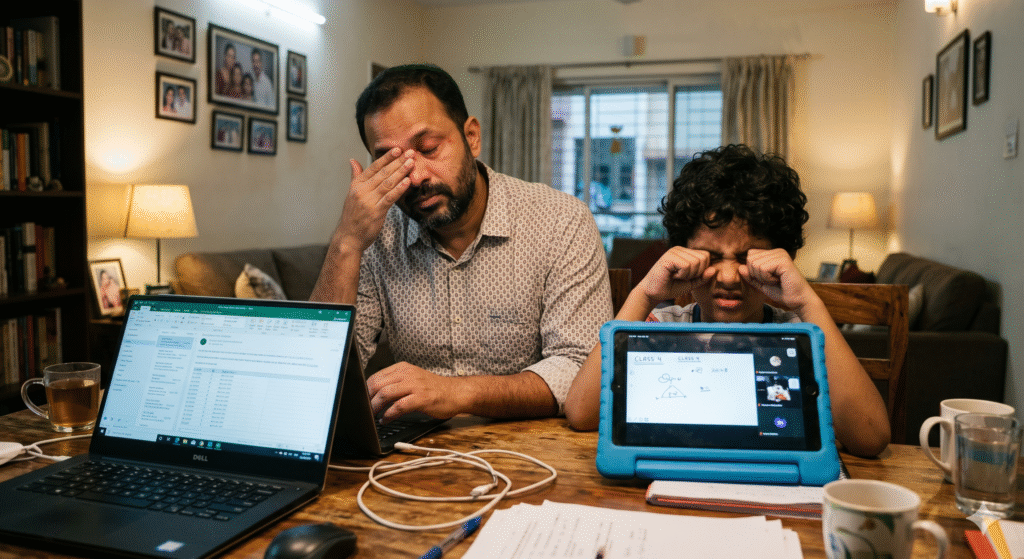
Children may not always express what they feel, so parents and teachers should watch for behavioural clues. Kids with digital eye strain often rub their eyes frequently, complain of headaches, lose interest in reading or homework, sit too close to the TV, or show shorter attention spans. They may also squint, tilt their heads, or have trouble copying from the board at school. If these signs appear regularly, it’s time for a complete eye check-up. Early intervention can prevent small issues from turning into long-term vision problems.
Prevention Tips: Protecting Screen Time Eye Health
The good news is that digital eye strain is largely preventable with simple lifestyle adjustments. These science-backed strategies can make a real difference for the whole family:
Follow the 20-20-20 rule. Every 20 minutes, look at something 20 feet away for at least 20 seconds. This relaxes the focusing muscles and gives your eyes a much-needed reset.
Adjust your workspace. Position your screen about an arm’s length away, slightly below eye level. Use proper lighting that reduces glare, and consider an anti-glare screen filter if needed.
Blink more often. Make a conscious effort to blink fully during screen time. Lubricating eye drops can help if dryness persists.
Embrace blue light eye protection. Blue light filters, special coatings on prescription glasses, and built-in night modes on devices can reduce exposure, especially in the evening hours. This supports both eye comfort and better sleep quality.
Set healthy screen time limits for kids. Pediatric experts recommend no screens for children under two, limited use for ages 2–5, and balanced screen time for older kids. Encourage outdoor play, as it has been shown to slow the progression of myopia.
Maintain good posture and hydration. Sit upright, keep your shoulders relaxed, and drink plenty of water to support overall eye function.
Pairing these habits with regular eye exams ensures small issues are caught early. To learn more about expert-led, family-friendly eye care, you can explore the team behind Dr. Solanki Eye Hospital, known for combining advanced technology with personalised attention.
Effective Eye Strain Treatment Options
When prevention isn’t enough, several proven eye strain treatment options can bring relief. A comprehensive eye exam is the best place to start, as it rules out underlying issues like astigmatism, hidden refractive errors, or convergence problems. From there, your eye specialist may recommend:
- Updated prescription glasses designed specifically for computer use
- Lenses with blue light filtering or anti-reflective coatings
- Lubricating or prescription eye drops to manage dryness and inflammation
- Vision therapy exercises to improve eye coordination and focusing ability
- Ergonomic counselling to optimise your workstation and posture
Most patients see noticeable improvement within a few weeks of starting treatment, especially when combined with healthier screen habits. The earlier you act, the easier it is to reverse symptoms and protect long-term vision. Families benefit most when adults and children are evaluated together, allowing prevention strategies to be tailored to each age group.
Take the First Step Toward Healthier Eyes Today
Digital eye strain is a modern problem, but it has very real solutions. Whether you’re an adult battling tired eyes after a long workday or a parent concerned about your child’s screen habits, getting professional guidance makes all the difference. Visit Dr. Solanki Eye Hospital to schedule a complete eye screening for your family. With the right care, healthy habits, and expert support, you can keep your vision sharp, comfortable, and ready for whatever the screen world throws your way.