
Diabetic Retinopathy Explained: How Diabetes Affects Your Eyes
Diabetes is far more than a blood sugar issue. Left unmanaged, it can quietly damage organs throughout the body, including the eyes. One of the most common and serious complications is diabetic retinopathy, a condition that affects the delicate blood vessels of the retina and remains a leading cause of preventable blindness worldwide. The tricky part is that it often shows no symptoms in its early stages, which means many people don’t realise their vision is at risk until significant damage has already occurred.
In this guide, we’ll break down what diabetic retinopathy really is, how diabetes causes eye damage, the warning signs to watch for, and the modern treatment options that can protect your sight.
What Is Diabetic Retinopathy?
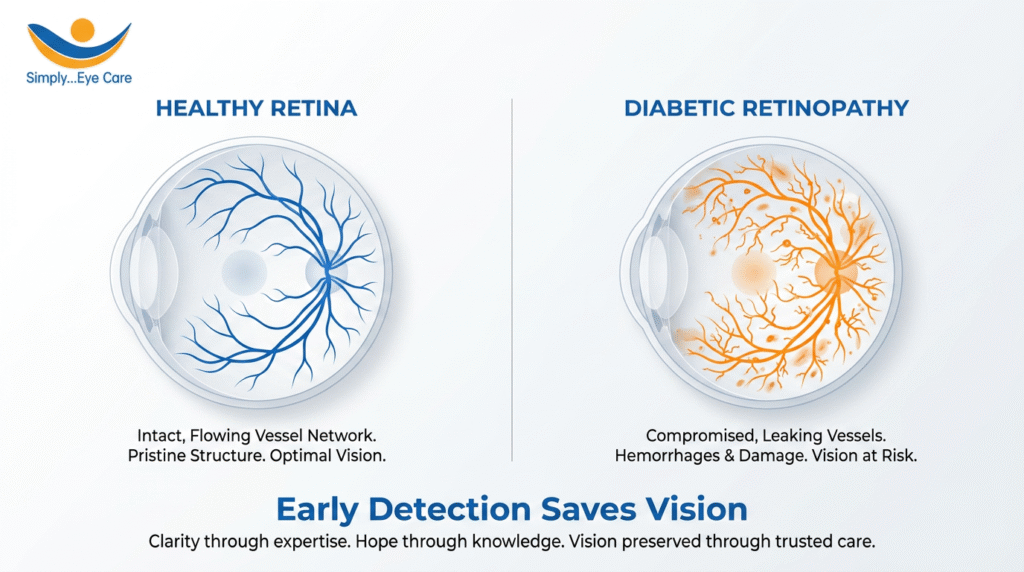
Diabetic retinopathy is an eye disease that develops when chronically high blood sugar levels damage the tiny blood vessels in the retina — the light-sensitive layer at the back of the eye. Over time, these damaged vessels can leak fluid, bleed, or completely close off. In response, the retina may grow new, fragile blood vessels that bleed easily and cause scarring. This combination can lead to blurred vision, blind spots, and, if untreated, eventually permanent vision loss.
Anyone with type 1 or type 2 diabetes can develop diabetic retinopathy, and the longer someone lives with diabetes, the higher the risk. Pregnancy, high blood pressure, high cholesterol, kidney disease, and smoking can all make it worse. Because diabetic retinopathy is one of the most common diabetes eye complications, regular retina screenings are essential for everyone living with the condition — even if vision still feels perfectly normal.
How Diabetes Causes Eye Damage: The Stages Explained
Diabetic retinopathy doesn’t appear overnight. It progresses through clear stages, each more serious than the last:
- Mild non-proliferative retinopathy: Tiny bulges (microaneurysms) form in the retinal blood vessels and may leak small amounts of fluid.
- Moderate non-proliferative retinopathy: More vessels are affected, and circulation to parts of the retina starts to weaken.
- Severe non-proliferative retinopathy: Many blood vessels are blocked, depriving the retina of oxygen and signalling the body to grow new vessels.
- Proliferative diabetic retinopathy: The advanced stage. New, abnormal vessels form on the retina’s surface. These are fragile and can bleed into the eye, causing severe vision problems.
- Diabetic macular edema: Fluid leaks into the macula — the part of the retina responsible for sharp central vision — causing it to swell. This can happen at any stage.
Eye damage from diabetes is often silent until it reaches a more advanced stage. By that point, vision loss may already be irreversible without prompt intervention. That’s why screening is so powerful: it catches the disease while treatment can still preserve sight.
Symptoms You Should Never Ignore
Early diabetic retinopathy often has no symptoms. As the disease progresses, however, several warning signs may emerge. Common symptoms include:
- Blurred or fluctuating vision
- Dark spots or “floaters” drifting across your sight
- Difficulty seeing colours clearly
- Trouble seeing at night
- Empty or dark areas in your field of vision
- Sudden vision loss in severe cases
If you have diabetes and notice any of these changes, don’t wait. Schedule an appointment with an experienced retina specialist in Bangalore immediately. Quick action can make the difference between saving and losing your vision. Even without symptoms, every person with diabetes should have a comprehensive dilated eye exam at least once a year — more often if their doctor recommends it.
Modern Diabetic Retinopathy Treatment Options
The good news is that medical advancements have made diabetic retinopathy highly treatable, especially when caught early. The right treatment depends on the stage of the disease, the location of the damage, and your overall health. Today’s options include:
- Anti-VEGF injections: Medications such as ranibizumab, aflibercept, and bevacizumab are injected into the eye to reduce swelling, prevent abnormal blood vessel growth, and improve vision. These are now the most common first-line treatments.
- Laser photocoagulation: A targeted laser seals leaking blood vessels and shrinks abnormal ones. It’s especially effective in proliferative retinopathy and macular edema.
- Steroid injections or implants: Help reduce inflammation and fluid buildup in the macula for certain patients.
- Vitrectomy: A surgical procedure to remove blood, scar tissue, or vitreous gel from the eye in advanced cases. It can restore vision when bleeding or retinal detachment occurs.
Most patients benefit from a combination of these approaches, customised by their retina specialist. Treatment is generally outpatient, well-tolerated, and increasingly precise thanks to advances in imaging tools like optical coherence tomography (OCT) and fluorescein angiography. With consistent care, many people preserve excellent vision for decades after diagnosis.
Prevention and Long-Term Retina Eye Care
While not every case of diabetic retinopathy can be prevented, the right habits dramatically reduce your risk and slow disease progression. Simple but powerful steps include:
- Keep blood sugar well controlled. Tight HbA1c management is the single most important factor.
- Manage blood pressure and cholesterol. Both directly affect retinal blood vessels.
- Schedule yearly dilated eye exams, even when your vision feels fine.
- Quit smoking, which significantly worsens diabetic eye complications.
- Eat a balanced, low-glycemic diet rich in leafy greens, omega-3s, and antioxidants.
- Stay active, aiming for at least 30 minutes of moderate exercise most days.
- Take medications as prescribed, and never skip diabetes follow-ups.
Long-term eye care also means building a relationship with a specialist who understands your medical history. A skilled retina team will track subtle changes year over year, fine-tune your treatment plan, and coordinate with your diabetologist. For trusted diabetic retinopathy treatment backed by advanced diagnostic technology, Dr. Solanki Eye Hospital offers comprehensive retina care designed to protect vision at every stage of diabetes.
Protect Your Vision — Book a Retina Screening Today
Diabetes may be lifelong, but vision loss doesn’t have to be. With early detection, modern treatment, and consistent care, diabetic retinopathy can be managed successfully and your eyesight preserved. Don’t wait for symptoms to appear — by then, damage may already be done. Book a comprehensive retina screening with an experienced specialist today and take control of your eye health. Your future vision is worth protecting, and the right care can make all the difference.