
Children’s Eye Problems Every Parent Should Know About
Healthy vision is one of the most important foundations of childhood. From learning to read to making sense of facial expressions and the world around them, children rely on their eyes for nearly every developmental milestone. Yet many parents don’t realise that kids can develop serious eye problems long before they can describe what they’re feeling. By the time symptoms become obvious, vision may already be affected.
Understanding the most common children’s eye problems and knowing when to consult a pediatric eye specialist empowers parents to protect their child’s sight, learning, and confidence. In this guide, we’ll cover the conditions every parent should watch for and the simple steps that make a big difference.
Why Early Eye Care Matters for Children
A child’s visual system develops rapidly during the first eight years of life. Vision plays a central role in motor skills, reading readiness, social development, and academic performance. Studies suggest that nearly 80% of what children learn during their early years comes through their eyes. When vision problems go unnoticed, kids often struggle with focus, behaviour, and school work — and parents may blame everything except their child’s eyes.
This is why early and routine eye check-ups are so important. The American Academy of Paediatrics recommends a child’s eye checkup at 6 months, again at 3 years, and before starting school. After that, regular screenings every one to two years help catch issues before they affect development. Children rarely complain about poor vision because they assume the way they see is normal. A trained pediatric eye specialist can pick up problems that even attentive parents may miss.
Common Kids Vision Problems: Refractive Errors and Myopia in Children
Refractive errors are by far the most common eye problems in children. They occur when the shape of the eye prevents light from focusing properly on the retina, leading to blurred vision. The three main types are:
- Myopia (nearsightedness): Distant objects look blurry while near objects appear clear.
- Hyperopia (farsightedness): Near objects are blurry, and the eyes strain to focus.
- Astigmatism: Vision is distorted at all distances due to an irregularly shaped cornea.
Myopia in children has risen dramatically in recent years, fueled by increased screen time and less time spent outdoors. Children with myopia often squint, hold books close to their faces, sit very near the television, or complain of headaches after schoolwork. Left uncorrected, myopia can progress rapidly through childhood and increase the risk of serious eye conditions later in life. Modern treatments such as specialised glasses, atropine eye drops, orthokeratology lenses, and myopia control contact lenses can effectively slow progression. If you suspect your child may be struggling to see clearly, an early visit to a child eye specialist in Bangalore can make a real difference.
Squint and Amblyopia: Conditions That Need Early Attention
Two of the most important yet often misunderstood childhood eye conditions are squint (strabismus) and lazy eye (amblyopia).
Squint (strabismus) is when the eyes don’t align properly. One eye may turn inward, outward, upward, or downward while the other looks straight ahead. Some squints are obvious; others are subtle and only show up when a child is tired or focusing. Squint can be caused by muscle imbalance, refractive errors, neurological issues, or family history. Without timely care, the brain may begin to ignore the misaligned eye, leading to permanent vision loss in that eye. Modern squint treatment for children may include glasses, vision therapy, eye patching, special eye drops, or corrective surgery for more severe cases. The earlier treatment begins, the better the outcome.
Amblyopia, or lazy eye, develops when one eye fails to develop normal vision during childhood, often due to squint, unequal refractive errors, or visual obstruction (such as a droopy eyelid). It’s one of the leading causes of vision loss in young people. The challenge is that amblyopia can’t be corrected with glasses alone; it requires active training of the weaker eye, usually by patching the stronger eye for several hours a day. Treatment is most effective before age seven, which is why annual screenings matter so much.
Other Children’s Eye Conditions Parents Should Watch For
Beyond refractive errors and alignment issues, several other eye conditions affect children regularly:
- Eye allergies: Itchy, red, watery eyes are common, especially in seasonal changes. Persistent rubbing can damage the cornea.
- Conjunctivitis (pink eye): A highly contagious infection causing redness, discharge, and crusting. Quick treatment prevents the spread in schools.
- Stye and chalazion: Painful lumps on the eyelid caused by blocked oil glands or infection.
- Blocked tear ducts: Common in infants, leading to constant tearing or sticky discharge.
- Congenital cataracts: A clouding of the lens present at birth that needs urgent surgical care to prevent permanent vision loss.
- Colour blindness: More common in boys, often detected during school screenings.
- Eye injuries: Sports, sharp objects, and chemicals can cause sudden damage and need immediate attention.
Parents should watch for signs such as frequent eye rubbing, head tilting, squinting, sitting very close to screens, headaches or blurry vision, difficulty reading, and poor academic performance. Any sudden change in behaviour or vision deserves a same-day pediatric eye consultation.
How to Choose the Right Pediatric Eye Specialist
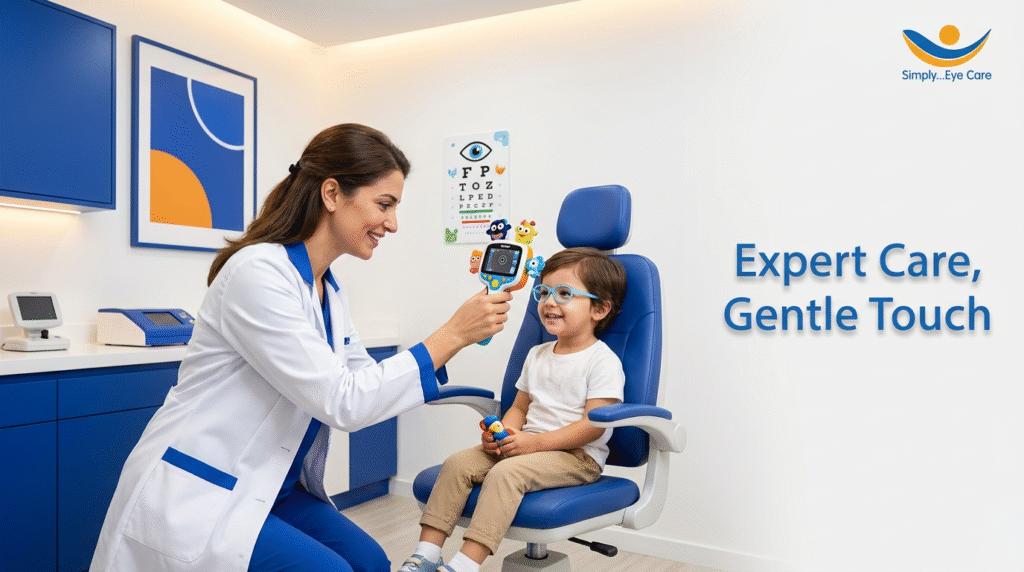
Not every eye doctor is trained to handle children’s vision needs. Pediatric eye specialists undergo additional training in child development, behaviour, and conditions unique to young patients. Choose a clinic that’s child-friendly, equipped with modern diagnostic tools, and run by doctors experienced in everything from myopia control to squint surgery. Comfortable surroundings, patient-friendly testing procedures, and clear communication go a long way toward making the visit easier for your child.
A trusted pediatric eye care team like the one at Dr. Solanki Eye Hospital offers comprehensive evaluations, personalised treatment plans, and ongoing support designed specifically for kids. Early diagnosis is the single biggest factor in protecting your child’s sight for life.
Give Your Child the Gift of Clear Vision — Book a Check-Up Today
Children rarely complain about how they see because they don’t know what “clear” is supposed to look like. As a parent, you’re their best advocate. Don’t wait for symptoms to disrupt your child’s learning, confidence, or development. Schedule a comprehensive eye check-up with an experienced pediatric eye specialist today and give your child the best possible start. Healthy eyes today shape a brighter, sharper future tomorrow.