

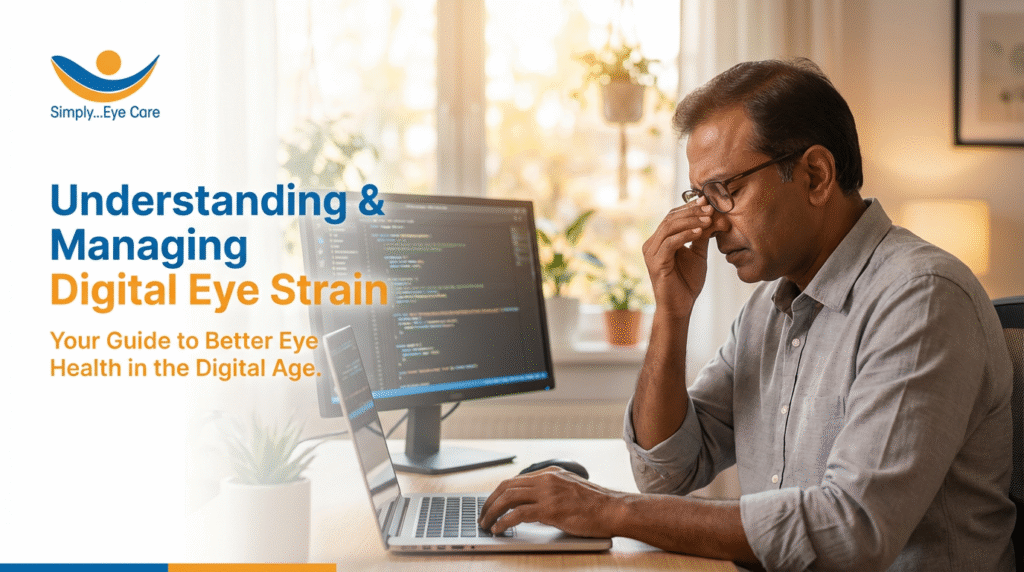
How Bangalore’s IT Work Culture Is Affecting Eye Health
Bangalore, India’s Silicon Valley, hosts over 4 million IT professionals who spend an average of 9-12 hours daily staring at digital screens. While the city’s thriving tech ecosystem has transformed India’s economy, it has simultaneously created a widespread eye health crisis among IT workers. The Bangalore IT work culture, characterized by extended screen time, high-pressure deadlines, and marathon coding sessions, is quietly damaging the vision of thousands of professionals. Understanding how Bangalore’s IT work culture is affecting eye health has become critical for the city’s massive tech workforce.
The Rising Epidemic of Digital Eye Strain in Bangalore’s Tech Hub
Digital eye strain in Bangalore has emerged as one of the most common occupational hazards in the city’s IT corridors. Also known as computer vision syndrome, this condition affects nearly 70% of IT employees who work extensively with computers. The symptoms include persistent headaches, blurred vision, dry and irritated eyes, neck pain, and difficulty focusing after work hours.
The problem stems from how our eyes function during prolonged screen exposure. When viewing digital screens, our blink rate drops from a normal 15-20 blinks per minute to just 5-7 blinks per minute. This dramatic reduction means the eye’s tear film evaporates faster than it can be replenished, leading to chronic dry eye syndrome.
IT professionals in Bangalore face unique challenges that amplify these issues. The Bangalore IT work culture often normalises 10-12-hour workdays, with many professionals remaining glued to their screens during lunch breaks and even after returning home. The competitive nature of Bangalore’s IT work culture creates pressure to meet project deadlines and participate in late-night calls with international clients—a perfect storm for IT employee eye problems.
Understanding Computer Vision Syndrome and Long-Term Consequences
Computer vision syndrome is a complex constellation of visual and physical symptoms resulting from prolonged computer use. Unlike simple eye fatigue that resolves with rest, computer vision syndrome can lead to long-term vision changes if left unaddressed. The condition affects accommodation (the eye’s ability to focus on near objects), convergence (how both eyes work together), and overall visual processing.
The ergonomic setup of most IT workspaces further compounds these issues. Improperly positioned monitors force the eyes and neck into uncomfortable positions. Poor lighting conditions create glare and contrast issues that strain the visual system. Many Bangalore IT campuses overlook these critical ergonomic considerations in workspace design. The connection between Bangalore’s IT work culture and deteriorating eye health becomes clearer when examining these workspace factors.
What begins as occasional eye discomfort can evolve into serious, long-lasting vision problems. Prolonged exposure to the conditions typical of Bangalore IT work culture accelerates the progression of myopia (nearsightedness) in young professionals. Studies document cases in which IT workers experienced significant changes in prescriptions within just 2-3 years of intensive screen work.
The psychological and productivity impacts of Bangalore’s IT work culture on eye health are equally concerning. Persistent eye discomfort affects concentration, decision-making ability, and overall work performance. IT professionals in Bangalore who suffer from untreated digital eye strain report increased error rates in their code, difficulty maintaining focus during meetings, and reduced creative problem-solving capabilities.
For comprehensive eye care solutions tailored to IT professionals, Dr. Solanki Eye Hospital offers specialized consultations and treatments designed specifically for digital eye strain and computer vision syndrome.
Practical Solutions: Protecting Your Vision in the Digital Age
Fortunately, IT employee eye problems are largely preventable with conscious effort and proper workplace practices. The 20-20-20 rule serves as a foundational strategy: every 20 minutes, look at something 20 feet away for at least 20 seconds. This simple practice allows the ciliary muscles to relax and promotes natural blinking.
Optimising your workspace ergonomics can significantly help combat the effects of Bangalore’s IT work culture on eye health. Position your monitor at arm’s length distance with the top of the screen at or slightly below eye level. Adjust screen brightness to match ambient lighting conditions and reduce glare by positioning your monitor away from direct light sources or windows.
Artificial tear supplements can relieve dry eye symptoms. Preservative-free artificial tears are preferable for frequent use throughout the day. Blue light filtering glasses may provide subjective comfort for many users experiencing digital eye strain in Bangalore, though their necessity remains debated in research circles.
Beyond these immediate interventions, regular comprehensive eye examinations are crucial for maintaining eye health in IT professionals. Annual eye exams allow ophthalmologists to detect early changes in vision and prescribe corrective lenses specifically optimised for computer work distances. These targeted solutions address how Bangalore’s IT work culture is affecting eye health at the individual level.
For personalised assessment and treatment plans that address your specific visual needs as an IT professional, schedule a consultation at Dr. Solanki Eye Hospital, where specialists understand the unique challenges faced by Bangalore’s tech workforce and the specific ways computer vision syndrome manifests in this demanding environment.
Take Control of Your Eye Health Today
Your vision is irreplaceable, and the demands of Bangalore’s IT culture don’t have to permanently compromise your eye health. While the tech industry continues its relentless pace, you can implement protective strategies that preserve your vision for decades to come. Understanding how Bangalore’s IT work culture is affecting eye health is the first step toward meaningful change.
The intersection of technology and health requires proactive management, especially given the documented rise in digital eye strain and computer vision syndrome cases. Don’t wait until eye discomfort becomes debilitating or vision changes become permanent. Whether you’re experiencing early symptoms of IT employee eye problems or want to prevent future complications, expert guidance can make all the difference.
Bangalore’s IT work culture may be demanding, but your eye health doesn’t have to suffer. Take action today to protect your vision and ensure that your career in technology doesn’t come at the cost of your most precious sense.